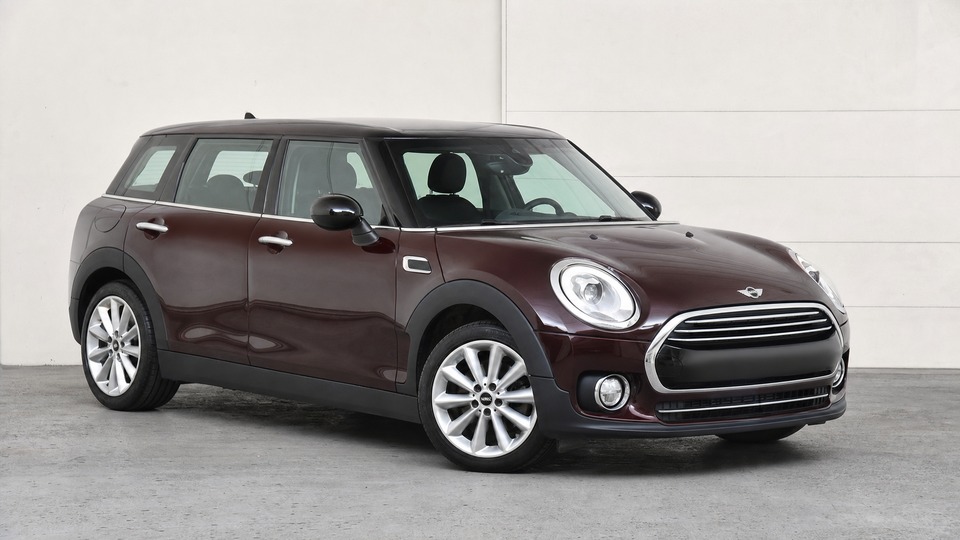
The largest Mini ever made, sharing its UKL2 platform with the BMW X1 F48. The base Cooper uses BMW's B38 1.5-litre three-cylinder turbo producing 136 hp, paired with a 6-speed manual or 6-speed Aisin automatic. The Clubman offers genuine estate-car practicality with distinctive split rear barn doors. Production ended in February 2024 with no direct successor planned.
Practical estate with premium feel
Efficient 3-cylinder, low fuel costs
Split rear door latches prone to issues
Engine mounts fail prematurely
Buy if: You want a stylish compact estate with a frugal engine and can verify the crankshaft bearing recall was completed on early models.
Avoid if: You need the lowest possible running costs or are considering an early 2015 car without verified recall history.
Expected Annual Maintenance Costs
Common Problems
Upper and lower engine mounts crack and collapse, often before 80,000 km · more· less
Engine mount failure is one of the most common issues on F-generation Minis. The hydraulic fluid-filled rubber mounts deteriorate faster than expected due to heat from the turbocharged engine and constant torque loading. Many owners report failure as early as 40,000-60,000 km, with some as low as 25,000 km. Symptoms include excessive vibration at idle (felt through the steering wheel and seats), clunking on startup, and a noticeable thump when shifting from Park to Drive. The three-cylinder B38 naturally has more vibration than a four-cylinder, making mount condition particularly noticeable. Mini does not sell the bushings separately, so the full mount assembly must be replaced. A Mini dealer charges €800-1,000, while independent specialists offer €400-600. No recall or TSB exists despite the widespread nature of this issue.
Barn door latches stick, fail to open or close properly, or open spontaneously · more· less
The Clubman's signature split rear doors use electric actuators and latches that are a known weak point. Common failures include doors not unlocking via keyfob, one door refusing to open while the other works, doors popping open at low speed, and latches that will not engage when closing. The plastic gears inside the latch mechanism strip or crack over time. Water ingress around the rear light seals accelerates corrosion of the mechanism. A software update (bulletin SIM 51 09 16) was issued to prevent accidental opening via the keyfob while driving, but does not address the mechanical wear. A single door actuator replacement costs €100-200 for parts plus 1-2 hours labour. If both doors and the central latch mechanism need attention, total costs reach €500-800. This is a Clubman-specific issue not shared with the F56 hatch.
Plastic thermostat housing cracks and electric water pump fails, typically after 70,000-100,000 km · more· less
The B38 uses a plastic thermostat housing that is prone to cracking from repeated thermal cycling. The electric water pump may be integrated with the thermostat housing, meaning both often need replacement together. O-ring seals on connecting pipes can also leak independently. Symptoms include low coolant warnings, poor cabin heating, or rising temperature gauge. Catching leaks early is critical because overheating can damage the head gasket. Parts cost for the combined housing/pump assembly is approximately €300-500, with labour running 3-6 hours due to tight access. Total repair: €500-800 at a specialist, €800-1,200 at a Mini dealer.
Tensioner loses oil pressure overnight, causing cold start rattle that signals chain stretch · more· less
The B38 uses a timing chain marketed as lifetime, but the hydraulic tensioner can weaken over time, allowing the chain to slacken overnight. On cold start this produces a metallic rattling sound lasting 1-30 seconds. The issue typically appears between 80,000-130,000 km, especially on cars with extended oil change intervals (BMW recommends up to 30,000 km, which is too long). If the chain stretches enough to jump timing, valve-to-piston contact destroys the engine. Replacing the tensioner, chain, guides, and sprockets costs €1,200-1,800 at a specialist. The base Cooper B38 is somewhat less prone to this than the higher-output B48 in the Cooper S, as it operates under less stress. Frequent oil changes every 10,000-15,000 km significantly reduce the risk.
Wastegate flap develops play or sticks from carbon buildup, causing rattle or limp mode · more· less
The B38 turbocharger's wastegate can develop play in the flap mechanism, causing a metallic rattle on cold start or at idle. In more severe cases, carbon buildup causes the wastegate to stick shut, triggering the drivetrain malfunction warning and limp mode. Short-trip and gentle driving accelerate carbon buildup. Mini does not sell the wastegate actuator separately, typically recommending a complete turbo replacement at €2,000-2,500. Independent specialists can sometimes repair the actuator for €500-800. The base Cooper operates under lower boost than the Cooper S, making this less common. Using premium fuel and occasional motorway driving helps prevent the buildup.
Blocked sunroof drains, AC drain, or rear door seals allow water into footwells and boot · more· less
The F54 Clubman has multiple water ingress pathways. The panoramic sunroof drain tubes can clog or detach, allowing water to run behind the headliner into footwells. The AC condensate drain can kink at the factory, pooling water in the passenger footwell. The seal between the roof and rear spoiler can fail, directing water into the boot. Most critically for the Clubman, the rear barn door vapour barriers can degrade, allowing water into the cargo area. Beyond damp carpets, the real danger is water reaching the body control module (located under the driver footwell carpet), which can cost €800-1,500 to replace. Always check footwells and boot storage compartment for dampness during inspection.
Direct injection deposits carbon on intake valves, causing rough idle and hesitation after 80,000+ km · more· less
As with all direct-injection engines, the B38 does not wash fuel across the intake valves, allowing carbon deposits to accumulate over time. Symptoms include rough idle, hesitation under acceleration, and increased fuel consumption. The three-cylinder engine can feel noticeably rougher when buildup is significant. Walnut shell blasting is the standard cleaning method, costing €400-700 at a specialist. With only three cylinders, the process is quicker than on four-cylinder engines. Short-trip driving and low-quality fuel accelerate the problem. Regular spirited driving and premium fuel help slow the buildup.
Improved over older Minis, but ancillary issues need monitoring
The B38 three-cylinder engine is a significant reliability improvement over the R56 generation's N-series engines. The catastrophic timing chain and fuel pump failures of the older engines are largely gone. However, engine mounts fail prematurely on many cars, the Clubman's signature barn doors have known latch issues, and the cooling system uses plastic components that can crack over time. Post-2016 models benefit from improved components and the 3-year warranty. With shorter oil change intervals (10,000-15,000 km) and prompt attention to small leaks, the Clubman Cooper can comfortably reach 200,000+ km.
Recalls and Technical Service Bulletins
Crankshaft guide bearing wear (Dec 2014 - June 2015 production)
Critical - verify completed
Side curtain airbag deployment issue (2016-2017 Clubman, built Aug 2015 - Jul 2016)
Verify completed
Crankshaft sensor firmware error (2018-2019 Clubman)
Verify completed
Takata airbag inflator replacement (affected production years)
Verify completed
The crankshaft guide bearing issue on early 2014-2015 B38 engines is the most critical item to verify. Mini classified it as a quality enhancement rather than a formal recall, so affected owners may not have been proactively contacted. If the bearing wore excessively before replacement, the engine itself may have been replaced. Contact a Mini dealer with the VIN to verify all recalls and enhancements have been completed.
Warranty Status
Factory warranty (2 years, 3 years from Nov 2016)
Expired on most used models
Rust perforation warranty (12 years)
May still apply on 2015+ models
Extended warranty availability
Available through Mini dealers and third-party providers
Mini models built before November 2016 had a 2-year factory warranty. From November 2016 onwards, Mini adopted the BMW 2+1 programme extending to 3 years. Most used Clubman F54 models on the market are now outside their factory warranty. Check with a Mini dealer using your VIN for any applicable extended warranties or outstanding recalls.
This report is for informational purposes only and does not constitute professional advice. Estimates may be inaccurate. Always have a qualified specialist inspect the vehicle before purchase. We accept no liability for decisions made based on this information.