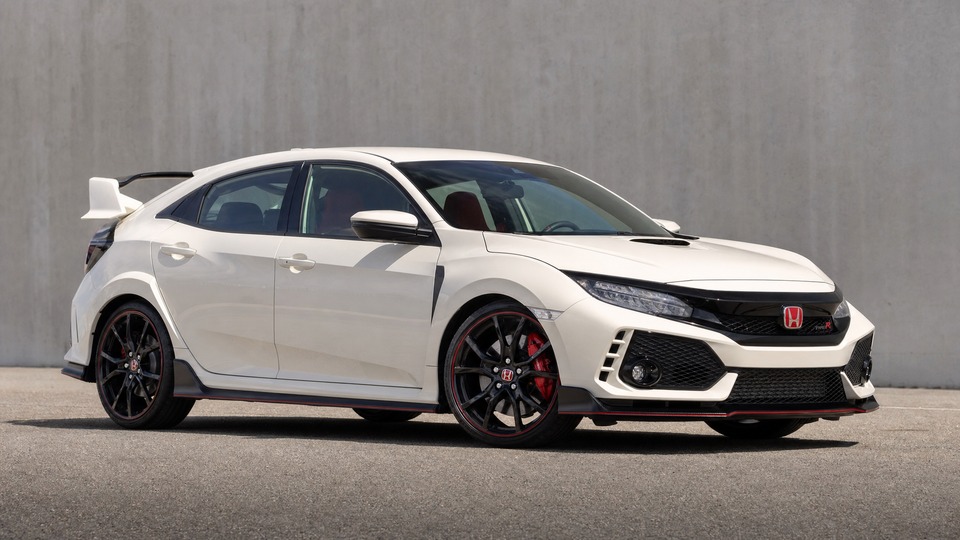
The first turbocharged Type R is a raw, uncompromising hot hatch loved by track day enthusiasts. Honda's legendary K20C1 engine proves extremely reliable when properly maintained, but the 6-speed manual gearbox is the FK2's Achilles heel - synchro wear causes crunching shifts, especially 2nd-to-3rd and into 4th gear, with repairs costing €3,000-4,000. The torsion beam rear suspension is harsh on UK/NL roads but delivers incredible track performance. Watch for overheating on track days (especially oil temps), check for seat bolster wear, and listen carefully for cold start timing chain rattle. Despite gearbox concerns, the mechanical package is generally solid - most issues are age-related rather than design flaws. The FK8 successor improved the ride quality significantly with independent rear suspension.
Expected Annual Maintenance Costs
€900 - €1,650/year
15,000 km/year
Fixed costs
€600-900
Risk buffer
€300-750
What Can Break
bars = likelihood
Gearbox synchro wear€3,000 - €4,000
Difficulty selecting gears, crunching from 1st to 2nd, jumping out of 4th gear · more· less
The FK2 gearbox has a well-documented weakness with synchro wear affecting 1st, 2nd, 3rd, 4th, and reverse gears. Symptoms include difficulty engaging 1st or reverse when cold, grinding when downshifting into 3rd, and 4th gear jumping out under load. This is becoming increasingly common as FK2s age and accumulate miles. Honda has been criticized for blaming driver technique and refusing warranty coverage. Repair involves replacing synchro hub assemblies and bearings, but because the replacement gearbox has the same specification, it may fail again. Some specialists offer improved parts during rebuild. If buying an FK2, consider this a €3,000-4,000 potential expense or budget €290/year for extended warranty coverage specifically for the gearbox.
Driver seat bolster wear€650 - €1,200
Universal Type R problem - high bolsters wear from entry/exit friction · more· less
The FK2's heavily bolstered Recaro seats are excellent for support but the high side bolsters wear quickly from normal use. The combination of tight bolsters, low seating position, and steering wheel placement makes it nearly impossible to avoid putting weight on the bolster when entering or exiting. Over time, the foam collapses and the suede-like material develops a lumpy, wavy appearance and loses color. OEM seat fabric replacement costs approximately €650 for the bottom portion alone, though this part may eventually be discontinued. Preventive measures include moving the seat all the way back and lifting yourself off when exiting, but most owners accept this as inevitable wear. Check the driver's seat carefully when buying - it reveals how the car was used and maintained.
Brake wear from track use€450 - €1,800
Track use accelerates pad and rotor wear, rear brakes undersized · more· less
Many FK2s have been used on track days where brakes endure extreme temperatures exceeding 800°C. The rear brakes are particularly undersized - using the same solid disc specification as a standard Civic, which struggles with heat management. Heavy track use can warp discs and burn through pads quickly. OEM brake replacement costs approximately €450-650 for a full set of pads and rotors at independent shops, while upgraded track pads like Carbone Lorraine RC6e run €800-1,200 for fronts alone. If the car's history includes regular track days, budget for more frequent brake service. Check for brownish discoloration on calipers, grooved/warped discs, and measure pad thickness carefully.
Overheating on track€1,200 - €2,500
ECU reduces power when temps exceed 25°C ambient, causes limp mode · more· less
The FK2 has inadequate cooling for sustained track use. The ECU progressively reduces power as coolant and oil temperatures rise, potentially cutting up to 60hp in tuned cars. Owners report limp mode activation after prolonged hard driving. Common upgrades include oil cooler (€800-1,200 installed), upgraded intercooler (€600-900), hood venting, and larger radiator (€500-800). The FK8 addressed this with improved cooling, including a larger grille opening. For track-focused FK2s, these cooling upgrades are nearly essential. Check service records for head gasket failure - some FK2s suffered this after repeated overheating, requiring cylinder head replacement at €1,800-3,700 depending on whether upgraded head studs are installed.
Turbo actuator failure€500 - €1,400
Wastegate actuator sticks from gentle driving or short trips · more· less
The electronic wastegate actuator can seize or malfunction, causing boost issues, EPC warning light, and limp mode. This tends to occur when cars are driven too gently or only for short journeys, allowing carbon buildup. OEM Mitsubishi MHI electronic actuator costs €320-400, but labor adds significantly to the total. If caught early, the actuator can be replaced independently for €500-700 at specialists. If ignored, turbo damage can occur requiring full turbo replacement at €1,400-2,500 including labor. Using premium fuel and occasional spirited driving helps prevent carbon buildup. Check for boost delivery issues and wastegate rattle during test drive.
Tire wear (235/35R19)€1,000 - €1,600
Performance tires wear quickly, especially with spirited driving · more· less
The FK2 uses 235/35R19 performance tires which are expensive and wear relatively quickly under hard driving. Michelin Pilot Sport 4S costs approximately €250-300 per tire in Europe. Many owners report OEM tires lasting only one summer with enthusiastic driving. Budget tires (€150-180 each) compromise the car's handling capabilities significantly. For a set of four premium performance tires expect €1,000-1,200, fitted and balanced. Rear tires typically wear faster due to the torsion beam suspension geometry. Track use dramatically accelerates wear - some owners replace tires every 10,000-15,000 km with regular track days.
Adaptive damper failure€1,200 - €2,000
Electronic dampers develop metal-to-metal clunking over bumps · more· less
The FK2 uses adaptive dampers that can fail after 40,000-60,000 km, producing clunking sounds over small bumps and causing the car to shift unexpectedly. Some owners report the damping can't cope with the spring rates, resulting in a bouncy ride especially on rough surfaces. The +R mode is often too harsh for public roads. Genuine Honda replacement dampers cost €400-500 each plus labor. Many owners switching to aftermarket coilovers (KW Variant 2, €1,200-1,500) report improved comfort and control, though this requires electronic damper delete modules (€100-150) to clear dashboard errors. Check for suspension noise and uneven tire wear patterns indicating worn dampers or bushings.
Water pump failure€650 - €1,100
Water pump typically fails between 70,000-100,000 km · more· less
The K20C1 uses an electric water pump integrated with the thermostat housing. Failures manifest as coolant warning lights, poor cabin heating, or overheating. Replacement intervals typically fall between 70,000-100,000 km. The newer FL5 Type R pump has improved flow rate and is a popular upgrade during replacement, significantly improving cooling performance. Parts cost €400-550 for upgraded FL5 pump kit (includes pulley, belt, hardware), plus approximately €250-400 labor due to accessibility. Always replace the thermostat when changing the water pump (adds €50-80 to parts cost). Check coolant level and condition - brown or milky appearance indicates existing problems.
Solid powertrain, but gearbox is a significant concern
The K20C1 engine has proven extremely reliable with proper maintenance - it's one of Honda's best turbocharged units. However, the gearbox represents a genuine concern with 40%+ of FK2s likely to experience synchro issues as they age. Many FK2s have seen track use which accelerates wear on brakes, tires, and cooling systems. Budget for the gearbox risk and inspect carefully for track-related wear. The FK8 successor addressed most of these issues with improved cooling and a revised transmission.
Pre-Purchase Inspection Checklist
General checks
Service history
Complete Honda dealer or Type R specialist records essential. Verify oil changes at proper intervals (every 12 months or 20,000 km).
Tires
Check tread depth, age codes, uneven wear. Rear tires wear faster with aggressive driving.
Cold start
Engine must be completely cold. Listen carefully for timing chain rattle in first 30 seconds.
Body condition
Check low front bumper and side skirts for scrapes. Inspect wheel arches for accident damage.
Extended test drive
Minimum 30 minutes including varied speeds and temperature conditions to test gearbox properly.
Specific for this vehicle
Test every gear change multiple times
Pay special attention to 1st-to-2nd, 2nd-to-3rd, and 4th gear engagement. Any crunching or difficulty is a red flag. Try 3rd gear downshifts - this commonly grinds on worn synchros. Check if 4th gear pops out under load.
Inspect driver's seat bolster closely
Heavy bolster wear indicates high mileage or careless ownership. Check for collapsed foam, wavy fabric appearance, and color loss. Budget €650+ for re-upholstery if needed.
Check brake pads and disc condition thoroughly
Measure pad thickness - less than 4mm means replacement soon. Look for grooved, warped, or discolored discs indicating track use. Check brake fluid color and condition.
Test all damper modes (Comfort/Sport/+R)
Listen for clunking over small bumps indicating damper failure. Check that mode switching works properly. Test +R mode - if it's unbearable on normal roads, dampers may be worn.
Verify boost delivery and check for EPC light
During test drive, monitor boost gauge (accessible via dash menu). Full boost should build smoothly. Any hesitation, EPC warning, or limp mode indicates turbo actuator issues.
Check coolant level and inspect for leaks
Low coolant or brown/milky appearance suggests water pump failure or head gasket issues. Look for oil in coolant reservoir. Check ground under car for coolant puddles.
Ask about track day usage
Many FK2s have seen track use. Check for oil cooler, intercooler upgrades, or aftermarket parts. Track cars need extra scrutiny on brakes, suspension, fluids.
Inspect alloy wheels for curb damage
19-inch wheels are expensive to repair or replace. Check for cracks, bends, and significant curb rash. Also check for proper wheel alignment.
Recalls and Technical Service Bulletins
A/C condenser warranty extensionExtended to 10 years
Electric power steering (EPS) specificationCheck with dealer
The FK2 was primarily sold in Europe and Japan, so check with Honda Europe or your national Honda importer for region-specific recalls. Contact Honda with your VIN to verify all applicable safety recalls have been completed. Note that Technical Service Bulletins (TSBs) are not mandatory recalls but document known issues and solutions.
Warranty Status
Factory warranty (3 years)Expired on all FK2s
Exhaust system corrosion (5 years)Likely expired
Structural corrosion (12 years)May still apply to 2015-2017 cars
All FK2s (2015-2017) are now outside their original 3-year factory warranty. Extended warranty coverage is available from third-party providers like Warranty Direct for approximately €290/year - this is highly recommended given the gearbox issues. Ensure any extended warranty explicitly covers gearbox/transmission failures as this is the FK2's main weakness.
This report is for informational purposes only and does not constitute professional advice. Estimates may be inaccurate. Always have a qualified specialist inspect the vehicle before purchase. We accept no liability for decisions made based on this information.